
Medically reviewed by Dr. Timur Mozner, DDS - General Dentistry | 20+ Years Experience | Last Updated: July 2026
How often you need dental X-rays is set by your mouth and your risk rather than by a fixed calendar. An adult with healthy teeth and gums and no active problems often needs a set of bitewing X-rays only every two to three years, while someone with new cavities, gum disease, or a specific symptom may need them more often. As for the radiation, a routine set is very small, on the order of a day or two of the natural background radiation you already live with, and modern digital sensors keep it lower still.
So if it feels like every visit ends with X-rays, that's a fair thing to notice and a fair thing to ask about. Here's when frequent imaging is genuinely warranted, when it's reasonable to wait, and what the radiation actually adds up to.
How Often You Actually Need Dental X-Rays
There is no single schedule that fits everyone, and that's the part you're rarely told. The American Dental Association guides dentists to base X-ray frequency on each patient's own risk rather than on a set number of months. In practice it tends to break down like this:
- New patients usually get a baseline set at the first visit, so the dentist has a starting picture of teeth, roots, and bone to compare against later.
- Established adults with low risk, meaning healthy gums, no recent cavities, and good home care, often need bitewing X-rays only every 24 to 36 months.
- Higher-risk adults, meaning active decay, gum disease, dry mouth, or a lot of existing dental work, may need them more often, sometimes every 6 to 18 months, because problems are moving faster and staying ahead of them matters.
- Children and teens often need them somewhat more frequently than a low-risk adult, since young teeth and jaws change quickly and early decay spreads faster.
- A specific problem such as pain, swelling, an injury, or planning for an implant, extraction, or root canal calls for an X-ray when it is needed, regardless of where you are in any routine cycle.
The point is that a healthy, established patient and a patient in active treatment should be on different X-ray schedules. Yours should track your actual risk.

Why It Can Feel Like You Get X-Rays at Every Visit
If you feel like you're being X-rayed constantly, one of a few things is usually true, and most of them are legitimate. You may be a new patient still building a baseline. You may be in active treatment, where a watched cavity, gum therapy, or implant planning genuinely needs current images. You may have come in with a symptom. Or your risk profile may simply put you on a shorter interval.
What should not be happening is a full set of X-rays at every six-month cleaning for a patient with healthy teeth, no symptoms, and low decay risk. That's exactly the situation where it's reasonable to ask your dentist a simple question: what will this X-ray show that changes my care today? A dentist who tailors frequency to your mouth will have a clear answer, and a good one will show you the image and walk you through it rather than leave you guessing.
How Much Radiation Is Really in a Dental X-Ray
The numbers are smaller than most people expect, and a comparison helps more than a figure alone.
A set of digital bitewing X-rays delivers roughly 0.005 millisieverts of radiation. For context, the natural background radiation you absorb just from living on Earth, from the ground, the air, and space, runs about 3 millisieverts a year, which works out to close to 0.01 millisieverts on an average day. So a routine set of bitewings is in the neighborhood of a single day of ordinary background radiation, and less than a typical cross-country flight, which adds around 0.03 to 0.04 millisieverts from being at altitude.
A panoramic X-ray, the single image that wraps around your whole jaw, is somewhat higher but still in that same small range. A 3D cone-beam scan, used mainly for implant planning rather than routine checkups, uses more than a flat X-ray, though it remains a fraction of the dose of a standard medical CT scan. Digital sensors are a large part of why these numbers are low, since they need far less radiation than the film X-rays that dentistry used for decades.
Does the Radiation Add Up Over the Years?
Any radiation carries a theoretical risk, and that's worth taking seriously rather than waving away. What the evidence supports is that the dose from routine dental X-rays is so small that, for most people, the benefit of catching decay, infection, or bone loss early tends to outweigh it. The things dental X-rays find, a cavity between two teeth, a problem at the root, bone loss from gum disease, are usually invisible to the eye and painless until they're advanced. Skipping a genuinely needed X-ray carries its own risk, which is finding a problem later and larger than it had to be.
The honest approach is to take the images that will actually change your care, on an interval that fits your risk, and to keep each dose as low as the technology allows.
How the Dose Is Kept Low
Modern dental imaging is built around a principle known as ALARA, short for as low as reasonably achievable. In everyday terms that means a few habits you should expect from any dentist: digital sensors instead of film, a lead apron and thyroid collar to shield the rest of your body, careful aiming so only the target area is exposed, and, most of all, only taking an image when it will genuinely inform your treatment. Frequency is itself a safety tool. The single most effective way to keep your lifetime dose low is to skip the images you don't need, which loops back to matching the interval to your risk.
When It Is Reasonable to Space Them Out
If you're an established patient with healthy teeth and gums, no symptoms, and low decay risk, it's reasonable to talk with your dentist about extending the interval between routine X-rays. That conversation should go both ways: a new symptom, a change in your health, or a new treatment plan can shorten the interval again for good reason.
A couple of special cases come up often. During pregnancy, routine dental X-rays are frequently postponed, while a truly necessary one can still be taken safely with proper shielding, so it's worth telling your dentist if you are or might be pregnant. For children, the guiding idea is the same as for adults, individualized to risk, just on a generally shorter cycle because young mouths change fast.
Dental X-Rays at Creative Dental of Syosset
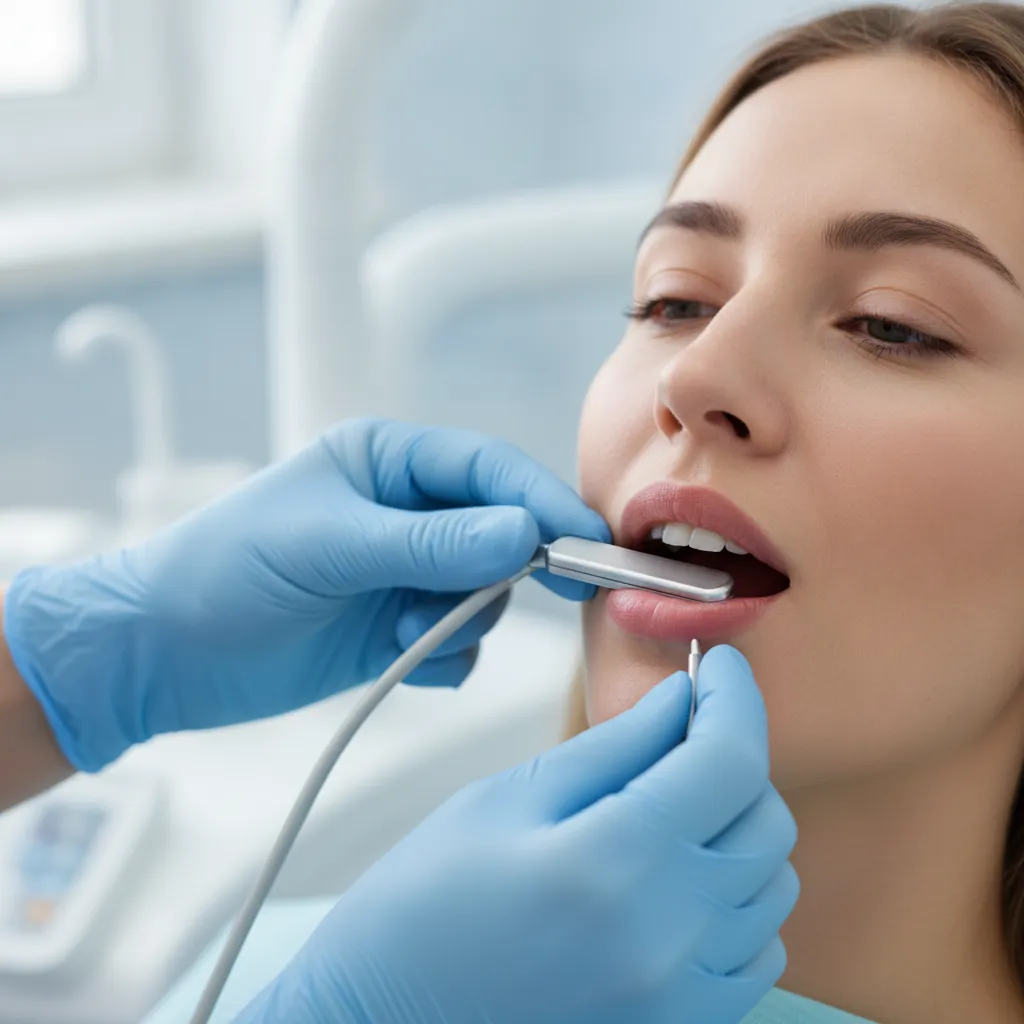
At Creative Dental of Syosset, imaging is digital, so the dose stays on the low end, and Dr. Timur Mozner keeps it tied to what your mouth actually needs rather than a blanket schedule. A standard visit uses bitewing or panoramic X-rays, and for patients planning an implant, a 3D cone-beam scan on the office Vatech scanner maps bone in three dimensions, a targeted scan reserved for that specific job rather than a routine checkup. Not every image taken here involves radiation: the Dexis digital scanner builds an on-screen model of your teeth with a handheld wand, and it is used for crowns, bridges, and Invisalign rather than for finding decay.
The part patients tend to remember is that Dr. Timur Mozner shows you your own images and explains what he's looking at, so you understand why a given X-ray was taken and what it found. He has practiced since graduating from SUNY Stony Brook School of Dental Medicine in 1998, and was named to America's Best Dentists in 2015, 2017, and 2021.
Dr Mozner has a very good way about him. He listens and explains your dental issues with you by sharing xrays so you can understand the problem.
Harvey Hirsh
If you're due for a routine cleaning and exam at Creative Dental of Syosset, or you want a straight answer about how often you personally need X-rays, book a visit or call (516) 921-3290.
Creative Dental of Syosset, 34 S Oyster Bay Rd, Syosset, NY 11791.
Common Questions About Dental X-Rays
Do I need X-rays if nothing hurts?
Sometimes, yes. The problems X-rays catch earliest, decay between teeth and bone loss from gum disease, are usually painless until they're advanced. That's the whole reason for imaging on an interval rather than waiting for symptoms.
Are digital X-rays safer than the old film ones?
They use noticeably less radiation for the same image, which is why most practices, including Creative Dental of Syosset, have moved to digital sensors.
Can I decline dental X-rays?
You can, and you can always ask why one is being recommended. Understand the tradeoff: without current images, a dentist is limited in what they can diagnose, and some problems can only be confirmed on an X-ray.
How often do children need dental X-rays?
It's individualized to each child's decay risk, generally on a shorter cycle than a low-risk adult because young teeth and jaws change quickly. Your dentist should be able to explain the interval they're recommending.
Disclaimer: This information is provided for educational purposes and is not a substitute for professional medical advice, diagnosis, or treatment. Please schedule a consultation with our team to discuss your individual needs.