

Medically reviewed by Dr. Timur Mozner, DDS, SUNY Stony Brook School of Dental Medicine | 20+ Years Experience | Last Updated: July 2026
For a clear, lasting change, professional whitening is usually worth the extra cost. In-office whitening uses a much stronger gel than any strip sold in a store, so it lifts your teeth about 2 to 3 shades in about an hour, and the results typically last around 3 to 5 years with good habits. Drugstore strips cost far less and are fine for a light touch-up, but they work slowly and their results usually fade within a few months.
The right choice depends on how much change you want and how long you want it to hold. Here's how the two really compare, from the strength of the gel to the price to how each one holds up over time.
Why Professional Whitening Is Stronger Than Any Store Strip
The single biggest difference is the concentration of the whitening gel. Store strips are made at a low strength so they're safe to use at home without supervision. The strongest bleaching gels are kept for use in a dental office, applied by a dentist, which is exactly why the store versions are made weaker.
At Creative Dental of Syosset, the in-office Zoom whitening uses a 15% hydrogen peroxide gel, stronger than what you can buy off the shelf. A protective barrier is placed to keep the gel off your gums while it works on the enamel. That higher strength, applied under a dentist's care, is what lets one visit do more than weeks of strips. As Dr. Tim Mozner puts it, the high-peroxide materials that produce a real shade change have to be handled by a dentist in the office, so store strips rely on a lower concentration that does less.
Strips have one more built-in limit. They're one shape for every mouth, so the gel doesn't sit evenly against every tooth. A professional treatment keeps the gel where it belongs across the whole smile, so the result comes out more even.
How Many Shades Whiter, and How Fast?
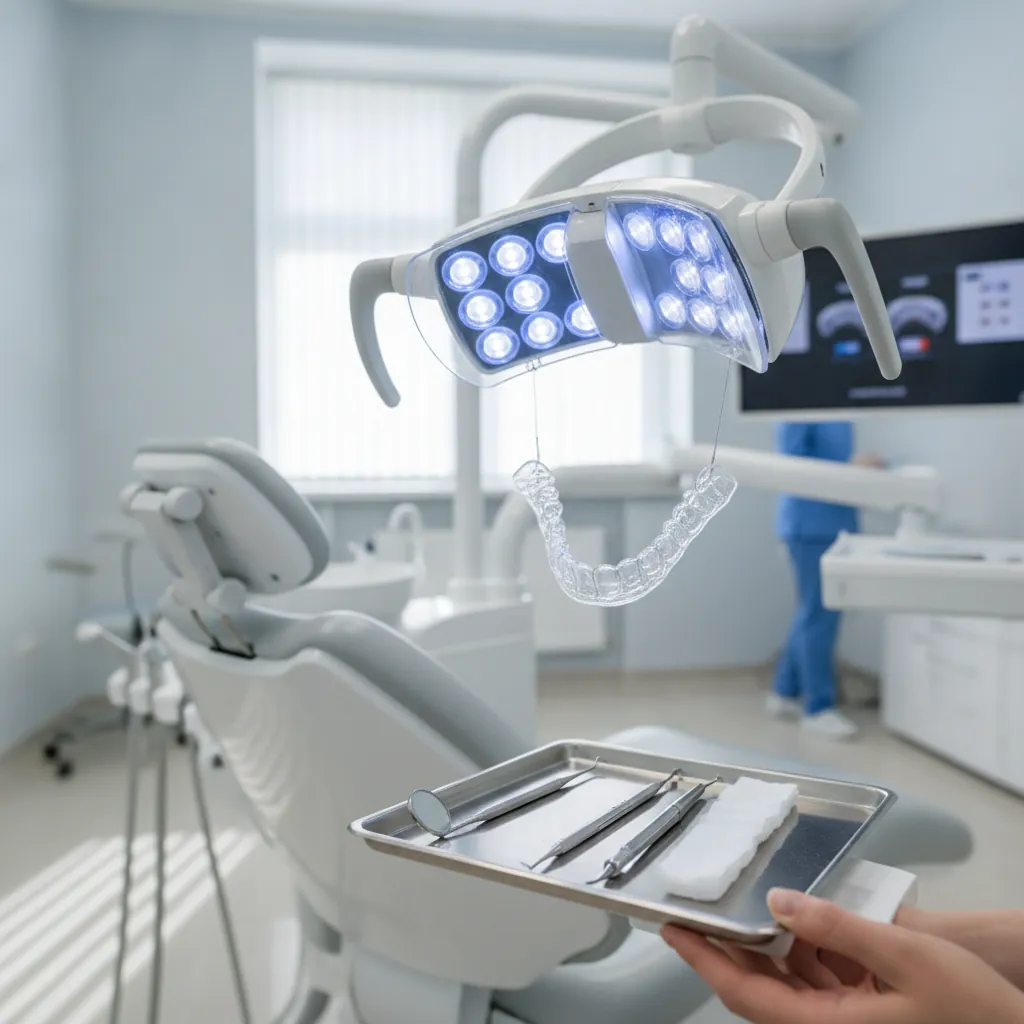
A single in-office Zoom whitening at Creative Dental of Syosset session takes a little over an hour and brightens teeth about 2 to 3 shades. You walk out the same visit with a visible change, which is why people book it before a wedding, an interview, or a vacation.
Strips move slower. Most brands ask for daily use over one to two weeks, and you tend to see a smaller change for that effort. They can lighten surface stains from coffee or tobacco by a shade or two, but heavy or deep staining often needs a professional treatment to reach the result you have in mind.
One honest limit applies to both: whitening only lightens natural enamel. It doesn't change the color of existing crowns, veneers, or fillings, so if you have dental work in your smile line, it helps to ask a dentist what to expect before you start.
How Long the Results Last, and What Makes Them Fade
This is where the gap is widest, and it's the part the strip guides tend to skip.
In-office whitening results typically last around 3 to 5 years. Store strips usually hold for a few months up to about a year before the color drifts back. So while strips cost less per box, you repeat them far more often to keep the same look.
Either way, your daily habits set the pace. Color returns sooner for heavy coffee, tea, and red wine drinkers and for smokers. For the first week after an in-office session, it helps to avoid deeply staining foods and drinks while the enamel settles. When the brightness does start to soften, a quick touch-up refreshes it, and custom take-home trays make that easy to do at your own pace.
What Professional Whitening Costs Compared to Strips
A one-week box of drugstore strips usually runs about $15 to $30, which is what makes them attractive for a first try. In-office whitening at Creative Dental of Syosset is $450 for a session, or $400 each when two people book together. Custom take-home trays are also an option if you'd rather whiten gradually and keep the trays for future touch-ups.
The fair way to weigh the price is by how long each result holds. Strips are cheap per box but need repeating every few months. One professional session costs more up front and holds for years, and it reaches a level of brightness strips generally cannot. If you want a real, lasting change, the in-office visit tends to be worth it. If you only want a small, short refresh, strips can do the job for less.
Will Professional Whitening Make Your Teeth Sensitive?
Some people feel mild, short-lived sensitivity for a day or two after whitening, and it settles on its own. It can happen with strips too, especially if they're left on longer than the box says.
Comfort is part of how this office works day to day. Dr. Tim Mozner checks your enamel and asks about any existing sensitivity before he starts, and the protective gum barrier keeps the gel where it should be during the session. The practice is known for painless dentistry and keeps options like nitrous oxide and noise-canceling headphones on hand for anxious patients. If your teeth run sensitive, the custom take-home trays let you whiten more slowly, which is gentler than one concentrated in-office session.
First time here and it was a great experience! The dentist understood my fear with dental equipment from past experiences in a different office so he and his assistant made sure I was comfortable and even provided options such as noise canceling headphones!
Yuriana Leon
When Drugstore Strips Are a Reasonable Choice
Strips are not a bad product, and a dentist will tell you that plainly. They make sense when your teeth have light surface staining, when your budget is tight, or when you want a small pick-me-up between professional treatments. They're also an easy first step if you've never whitened before and want to see how your teeth respond.
Where they fall short is deeper staining, an even result across the whole smile, and staying power. They also won't help discoloration that comes from tartar buildup, an old filling, or a medication, which is worth a professional look rather than more boxes of strips. If a few rounds of strips haven't gotten you where you want to be, that's usually the sign to move up to a professional treatment.
Whitening at Creative Dental of Syosset
At Creative Dental of Syosset, Dr. Tim Mozner performs the whitening himself. He has practiced dentistry on Long Island for more than 20 years and was named to America's Best Dentists in 2015, 2017, and 2021. He checks your enamel and any sensitivity first, tells you up front what your specific smile can expect, and offers both the one-hour in-office Zoom treatment and custom take-home trays so the approach fits your goals and your comfort.
i went to dr. tim mozner for teeth whitening and i was so amazed at the results!
natalie rodgers
If you're weighing strips against a professional treatment, you can book a whitening consultation at Creative Dental of Syosset, or call (516) 921-3290. Dr. Tim Mozner will look at your teeth and give you an honest read on which option gets you the result you want.
Frequently Asked Questions
Can I use strips first and get professional whitening later?
Yes. Many people start with strips and move to a professional treatment when they want a bigger or longer-lasting change. Whitening doesn't have to be a one-time choice, and a dentist can help you plan touch-ups so your results hold.
Does whitening work on crowns or veneers?
No. Whitening lightens natural enamel only, so it doesn't change the color of existing crowns, veneers, or fillings. If you have dental work in your smile line, ask a dentist how to match or plan around it before you whiten.
How often can I whiten my teeth?
For in-office treatments, most people whiten and then touch up every few years as the color softens. Overusing whitening, including leaving strips on longer than directed, can lead to sensitivity, so it's best to follow professional guidance on timing.
Disclaimer: This information is provided for educational purposes and is not a substitute for professional medical advice, diagnosis, or treatment. Please schedule a consultation with our team to discuss your individual needs.