
Medically reviewed by Dr. Timur Mozner, DDS - General Dentistry | 20+ Years Experience | Last Updated: September 2026
Yes, fluoride varnish helps adults. A quick in-office coat of 5 percent sodium fluoride varnish reduces tooth sensitivity from exposed roots and worn enamel within about two weeks, and it hardens the soft root surfaces that adults develop with age against decay. It is one of the fastest, best-studied preventive treatments a dentist can offer, and it takes under a minute per visit.
Most people first meet fluoride varnish as a treatment for children. The adult case is often stronger. Once gums recede and roots show, and after years of whitening, grinding, and acidic diets, adult teeth face risks that a child's enamel never does. Fluoride varnish answers those specific risks directly.
How Fluoride Varnish Relieves Sensitivity From Exposed Roots and Worn Enamel
Sensitivity happens when the dentin under your enamel is exposed. Dentin is full of microscopic channels called tubules that run straight to the nerve, so cold water, air, sweets, and brushing all send a jolt inward.
Fluoride varnish plugs those tubules. When the varnish releases fluoride onto exposed dentin, it forms calcium fluoride and related mineral deposits that seal the openings. That blocks the pathway to the nerve and dampens the pain signal.
Clinical trials show fluoride varnish reduces dentin hypersensitivity, with relief building over the first 15 to 30 days after application. It is not a one-time cure. For ongoing sensitivity from receding gums, varnish is usually repeated at cleanings and paired with a desensitizing or prescription-strength fluoride toothpaste at home.
Why Adult Root Surfaces Get Cavities That Enamel Never Would
The crown of your tooth is protected by hard enamel. The root is not. Roots are covered by a thinner, softer layer called cementum, and once gum recession exposes the root, it decays faster and at a higher pH than enamel does.
Root cavities are largely an adult problem. They cluster along the gumline, spread sideways, and often sit close to the nerve, which makes them harder and more expensive to fix than a cavity on a chewing surface. Adults over 50, anyone with gum recession, and patients with dry mouth are the most exposed.
Fluoride varnish is a frontline defense here. The high-dose fluoride remineralizes the softened root surface and slows or stops early root decay before it needs a filling.
Adults Who Benefit Most From Fluoride Varnish
Dr. Mozner and his team commonly recommend fluoride varnish for adults who have:
- Gum recession or exposed tooth roots, which decay far faster than enamel
- Sensitivity after teeth whitening, worn enamel, or aggressive brushing
- Dry mouth (xerostomia) from blood pressure, antidepressant, antihistamine, and other medications, from Sjogren syndrome, or from head-and-neck radiation
- Acid reflux or GERD, which erodes enamel from behind
- A history of frequent cavities or repeat decay around old fillings and crowns
- Braces or Invisalign, which trap plaque and cause white-spot lesions along the gumline
- Cancer treatment, where chemotherapy and radiation sharply raise decay risk
- Pregnancy, where hormonal changes increase cavity risk and the ADA confirms varnish is safe
If two or more of these apply to you, you are exactly the adult the ADA has in mind when it recommends professional topical fluoride for people at elevated risk of decay.
How Fluoride Varnish Rebuilds Enamel Into Acid-Resistant Fluoroapatite
Enamel is mostly a mineral called hydroxyapatite. Every time acid from bacteria, sugar, or citrus hits your teeth, it pulls calcium and phosphate out of that mineral. This demineralization is the first step of every cavity.
Fluoride reverses it. In the presence of fluoride, the tooth rebuilds with fluoroapatite, a mineral that resists acid far better than the original enamel. Varnish delivers this in a concentrated dose (5 percent sodium fluoride, about 22,600 ppm) and, unlike a rinse or foam that washes out in minutes, it sticks to the tooth and keeps releasing fluoride for hours after you leave.
How Often Adults Should Get Fluoride Varnish: Every 3 to 6 Months for Higher Risk
The protective benefit of one application lasts roughly 3 to 6 months. That timeline is why the American Dental Association recommends reapplication every 3 to 6 months for anyone at elevated risk of decay.
A practical guide for adults:
- Low risk (healthy enamel, no recession, few cavities): once a year at your annual cleaning is usually enough
- Elevated risk (gum recession, dry mouth, frequent cavities, GERD, radiation history): every 3 to 6 months
- Active orthodontic treatment: every 3 months while braces or aligners are on, which sharply cuts white-spot lesions
What a Fluoride Varnish Appointment Looks Like
The application is the easiest part of any cleaning. It takes a few minutes total:
- Cleaning first. Varnish goes on after your teeth are cleaned so plaque cannot block the fluoride.
- A quick dry. Your hygienist dries the teeth with gauze or a short puff of air.
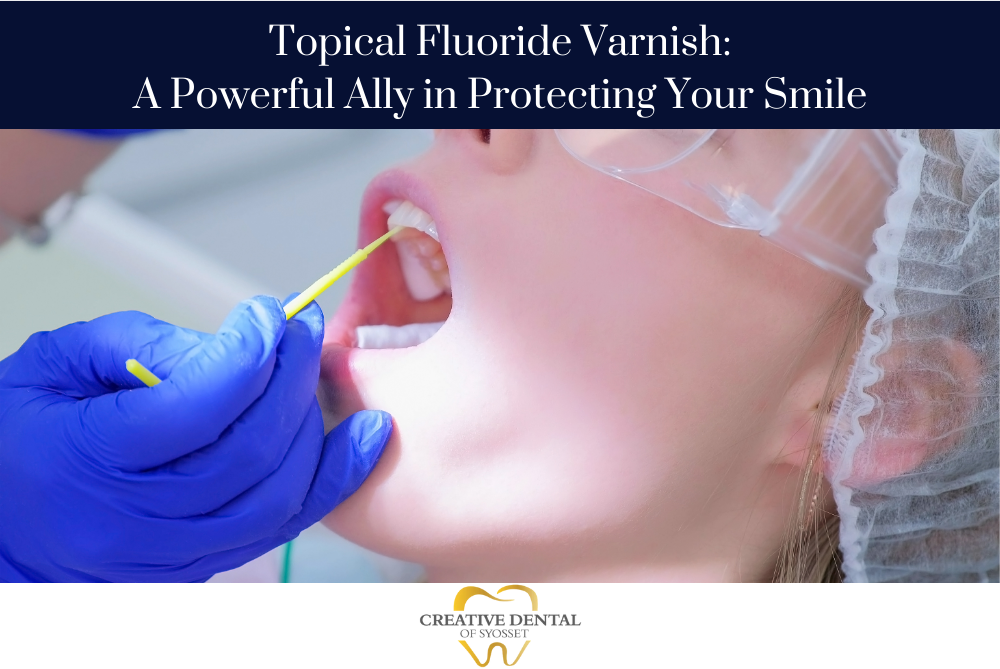
- Painting. A small brush coats a thin layer onto each tooth. The full mouth takes under 20 seconds.
- Hardening. The varnish sets on contact with saliva. You can talk, swallow, and sip water right away.
- Done. No numbing, no needles, no recovery. You drive yourself home and get on with your day.
Aftercare: Wait 4 to 6 Hours Before You Brush or Eat Hot Food
To get the full benefit, follow these steps for the next 4 to 6 hours:
- Do not brush or floss, so the varnish stays put and finishes releasing fluoride
- Skip hot foods and hot drinks, which soften and rinse the varnish off
- Avoid hard, crunchy, or sticky foods like apples, popcorn, gum, and caramel
- Drink water and eat soft, room-temperature food if you are hungry
- Resume normal brushing and flossing the next morning
A slight yellow tint and a sticky feel for a few hours are normal. Both brush away that evening. There is no permanent staining.
How Fluoride Varnish Compares to Gels, Rinses, and Prescription Toothpaste
Not all fluoride is applied the same way. Here is how varnish stacks up:
| Treatment | Fluoride strength | How it works |
|---|---|---|
| Fluoride varnish (in-office) | 5% sodium fluoride (about 22,600 ppm) | Painted on, hardens in seconds, releases fluoride for hours. The most effective in-office option. |
| Fluoride foam or gel (in-office tray) | 1.23% acidulated phosphate fluoride | Held in a foam tray for 4 minutes. Higher gag-reflex risk, less staying power than varnish. |
| Prescription high-fluoride toothpaste | 5,000 ppm sodium fluoride | Daily home use for high-risk adults, often paired with in-office varnish. |
| Fluoride rinse | 0.05% daily or 0.2% weekly sodium fluoride | A useful supplement, not a substitute for varnish. |
| OTC fluoride toothpaste | 1,000 to 1,500 ppm | Your daily baseline. Cannot deliver a high-dose remineralization treatment. |
For an adult at higher risk, the strongest plan is usually varnish at every cleaning plus a prescription-strength toothpaste at home.
What Adult Fluoride Varnish Costs on Long Island and Whether PPO Plans Cover It
Out of pocket, adult fluoride varnish generally runs $25 to $50 per application across the Long Island and New York metro area.
- Pediatric coverage: Most dental plans, including New York State Medicaid, cover fluoride varnish twice a year for patients under 18 at no cost.
- Adult coverage: Some PPO plans cover adult varnish, especially with a documented high-risk diagnosis such as gum recession, dry mouth, or a history of frequent cavities. It varies by plan.
Creative Dental of Syosset accepts PPO insurance plans and offers CareCredit financing. The team verifies your benefits before treatment, so you know your out-of-pocket cost before anything is done.
Frequently Asked Questions About Fluoride Varnish for Adults
Does fluoride varnish help with sensitive teeth?
Yes. It is one of the most effective quick in-office treatments for tooth sensitivity, especially sensitivity from exposed roots or worn enamel. The fluoride seals the open dentin tubules that carry the pain signal to the nerve, with relief building over the first two to four weeks.
Is fluoride varnish worth it for adults, or is it just for kids?
It is worth it for adults, and in some cases the adult case is stronger. Gum recession, dry mouth from medications, GERD, whitening sensitivity, and decay around older fillings are all adult risks that varnish directly addresses. The ADA recommends professional topical fluoride for adults at elevated risk of decay.
Does fluoride varnish stop root cavities?
It helps stop early ones. Exposed roots are softer than enamel and decay faster, and the high-dose fluoride in varnish remineralizes the root surface to slow or halt early decay before it needs a filling. Established cavities still need to be restored.
How often should an adult get fluoride varnish?
Low-risk adults usually need it once a year at their annual cleaning. Adults at higher risk such as gum recession, dry mouth, frequent cavities, radiation history, or braces and aligners benefit from an application every 3 to 6 months.
Is fluoride varnish safe for adults?
Yes. The ADA and CDC support professional topical fluoride for adults at elevated risk of decay. Because the varnish hardens on the teeth and releases fluoride slowly, almost none is swallowed.
Can I eat and brush after fluoride varnish?
You can drink water and eat soft, room-temperature food right away. Wait 4 to 6 hours before brushing, flossing, or having anything hot, hard, or sticky, so the varnish can finish working.
How much does adult fluoride varnish cost near Syosset?
It typically costs $25 to $50 per application out of pocket in the Long Island and New York metro area. Some PPO plans cover it for adults with a documented high-risk diagnosis. Our team verifies your specific benefits first.
Book Your Fluoride Varnish Treatment in Syosset
If your teeth twinge with cold, your gums have pulled back, or you want to protect exposed roots before they decay, ask about fluoride varnish at your next cleaning. It adds under a minute to the visit and pays off for months.
Creative Dental of Syosset, 34 S Oyster Bay Rd, Syosset, NY 11791. Phone: (516) 921-3290. Hours: Mon and Wed 10 AM to 6 PM, Tue and Thu 9 AM to 6:30 PM, Fri 10 AM to 3 PM, Sat 9 AM to 3 PM.
Dr. Mozner sees patients himself rather than rotating you through associates, and the office serves Syosset, Oyster Bay, Jericho, Plainview, Hicksville, Bethpage, and the surrounding Nassau County towns. Schedule online or call to add fluoride varnish to your next cleaning.
Disclaimer: This information is provided for educational purposes and is not a substitute for professional medical advice, diagnosis, or treatment. Please schedule a consultation with our team to discuss your individual needs.