

Medically reviewed by Dr. Timur Mozner, DDS - General Dentistry | 20+ Years Experience | Last Updated: September 2026
Sometimes, yes. A tooth can come out and an implant can go into that same socket at the same visit, and when the conditions are right it saves you months. But the decision gets made by what the socket looks like once the tooth is out, not by what anyone hoped for that morning. Dr. Mozner, who has placed roughly 3,000 implants over his career, puts the trade-off plainly:
"In general, immediate implant placement lowers success rate and it should be discussed with a patient."
That sentence is the part most pages skip, and it is the one that should shape your decision.
What the socket has to look like for the implant to go in that day
An implant needs bone gripping it on all sides to stay still while it fuses. A fresh extraction socket is a hole shaped like the root that just left it, so the question is whether the implant can fill that hole and still bite into solid bone around the edges. In Dr. Mozner's words:
"Yes, in some instances a dental implant can be placed on the same day as a tooth extraction. Particularly, it works with high chance of success if an implant is larger in diameter than the extracted site. If not, a bone graft will be necessary. In general, an implant should engage 3/4 of circumference of the bone in extraction site to be successful and there is, also, an adequate bone to choose longer implant."
Three quarters of the circumference is a real threshold, not a feeling. If the socket is wider than the implant, or a wall of it has broken down, that grip is not there, and bone grafting before a dental implant comes first. The graft is not a failure or an upsell, it is what makes the implant hold years later.
Same-day implant and same-day tooth are two different promises
Patients often hear "same day" and picture walking out with a finished tooth. Those are separate steps.
Placing the implant on extraction day is one thing. Loading it, meaning putting a tooth on it that you chew with, is another, and doing both at once asks a lot of an implant that has not fused yet. In many cases the implant goes in and a temporary tooth that does not take chewing force sits over it while the bone does its work over a few months.
So when a practice advertises teeth in a day, ask which part is happening the same day: the implant, the tooth, or both.
Your bone and your medical history decide more than your schedule
Two people can have the same broken molar and get different answers, because bone is not the same everywhere or in everyone.
"Bone density (hardness) affects implant acceptance by the body. Bone is denser on the bottom jaw rather than the top. Bone density and tissue healing depend on a few factors such as smoking, severe diabetes, severe osteoporosis, radiation/cancer treatment, platelet dysfunction and the lack of adequate amount of Vitamin D3. All of these factors negatively contribute to the diminished success rate of implant procedure."
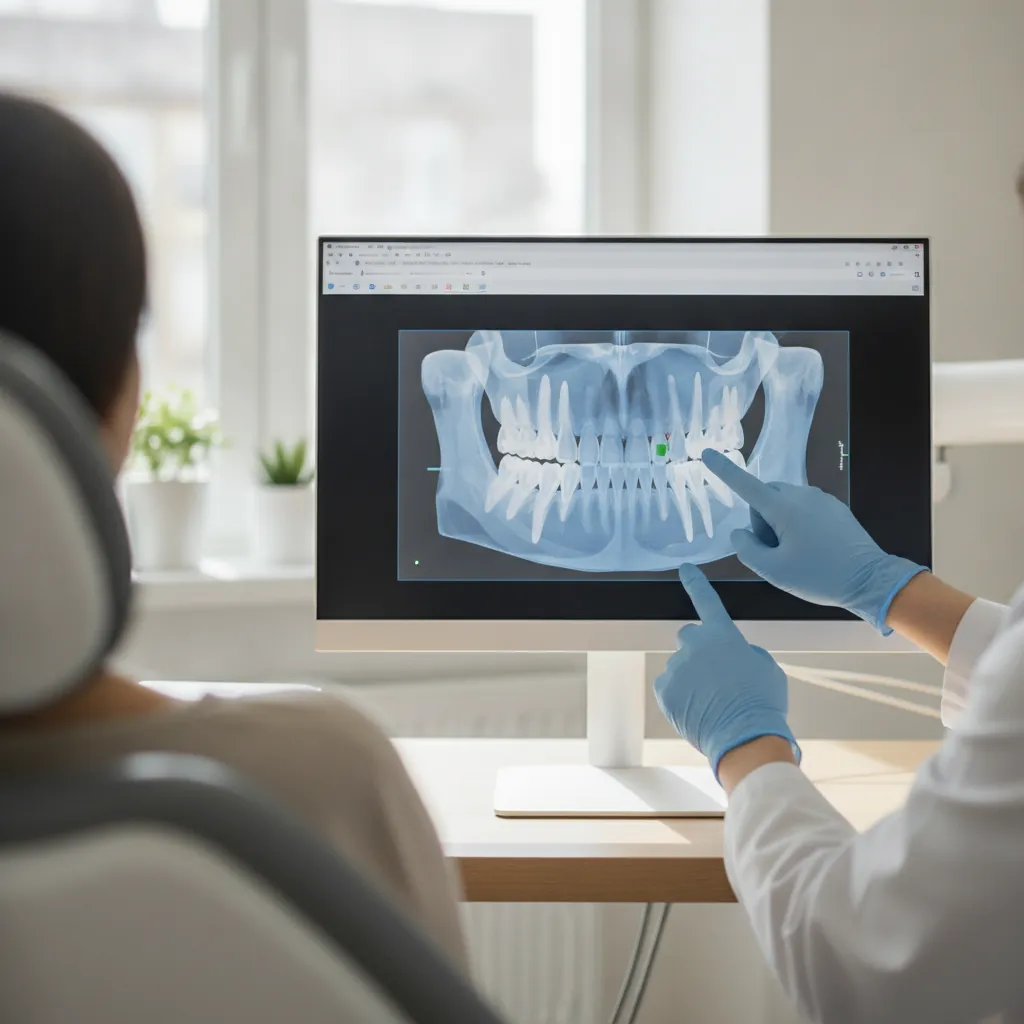
That is why Dr. Mozner asks for a complete blood test before implant surgery, and why a 3D CT scan comes before any promise about timing. The scan shows the bone height and thickness around the tooth being removed, which is what tells him whether a longer, wider implant can be anchored that day.
Upper back teeth are the most common place where the answer turns into "not today". The bone there is softer and the sinus sits close above it.
An infected tooth usually rules out same-day placement
If the tooth coming out has a serious infection around it, putting an implant into that site the same day is asking it to fuse in compromised bone. Dr. Mozner's approach there: antibiotics before and after, the socket cleaned out and grafted, and the implant placed later once the site has healed.
It costs you an extra visit and a few months. It also keeps you from paying for an implant that fails in year two.
Front teeth carry a different kind of risk
For a front tooth, the gum line is the whole result. Immediate placement can help preserve the shape of the gum and the bone that supports it, which is why it gets considered more often in the smile zone. It is also where a small amount of gum recession shows up as a visible dark edge.
Dr. Mozner weighs a handful of things before committing to immediate placement, including how badly you need the tooth now, whether it is in a highly cosmetic area, and whether a temporary you can live with exists. A Snap-On Smile, a flexible removable partial or a flipper can cover a gap for a few months, and for some patients that is the better trade than pushing an implant into a site that is not ready.
What to ask before you schedule the extraction
Bring these to the consultation, whether the tooth extraction happens at our office or anywhere else:
- Will the implant go in the day of the extraction, or later?
- Will I leave with a temporary tooth, and will I be able to chew on it?
- Does my scan show enough bone, or do I need a graft first?
- If the socket looks worse than expected once the tooth is out, what is the backup plan that day?
- What does the whole plan cost, listed piece by piece?
That fourth question matters most. The honest answer is that the plan can change in the chair, and a dentist who tells you that up front is the one you want holding the instrument.
If you are facing an extraction in Syosset and want to know which timeline fits your case, book a consultation with Dr. Mozner. He will tell you what your scan allows, including when waiting is the better call. You can also read more about dental implants at Creative Dental of Syosset, or how long dental implants actually last once they are in.
Disclaimer: This information is provided for educational purposes and is not a substitute for professional medical advice, diagnosis, or treatment. Please schedule a consultation with our team to discuss your individual needs.