
Quick Answer
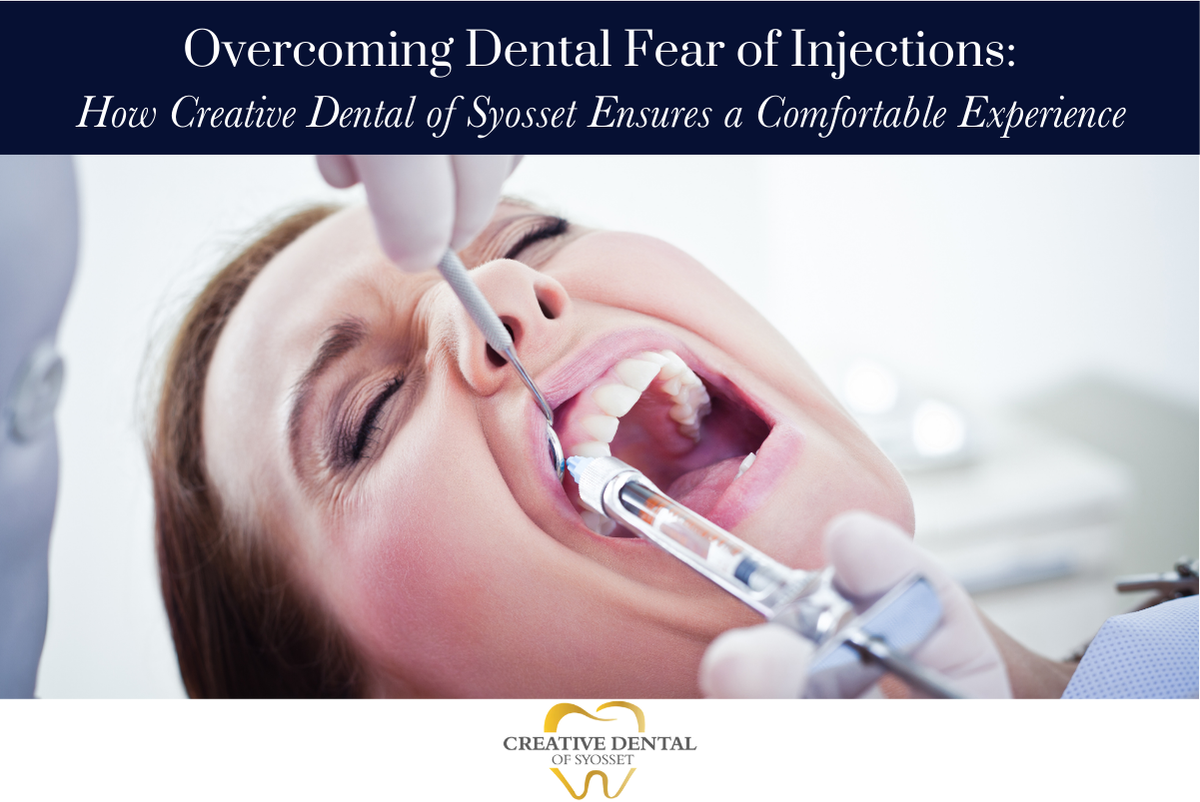
To overcome fear of dental injections, tell the dentist before treatment, request topical numbing gel with full dwell time, ask for a slow injection, use distraction tools like noise-canceling headphones, and step up to nitrous oxide if the fear is severe. Roughly 1 in 4 adults reports clinically significant fear of dental injections per the 2009 UK Adult Dental Health Survey. At Creative Dental of Syosset, Dr. Timur Mozner, DDS, runs a painless-dentistry protocol that combines all five techniques plus Netflix during the procedure, with patient communication available in English, Polish, Russian, and Ukrainian.
How to Overcome Fear of Dental Injections (Step by Step)
The 7 steps below are the protocol Dr. Mozner uses for every nervous patient at Creative Dental of Syosset. Each step targets a specific source of injection anxiety, and they are designed to stack: doing all 7 produces a near-painless experience even for patients with strong needle phobia.
- Tell your dentist before you sit down. Use the words “I have a fear of dental injections” at the start of your consultation, not in the chair. This single sentence triggers our team to plan the gentlest possible protocol from the first moment, including more time per visit, slower pace, and a pre-arranged hand signal you can use to pause at any moment.
- Ask for topical numbing gel with 60 seconds of dwell time. Benzocaine 20 percent (the standard topical anesthetic) needs roughly 60 seconds in contact with the gum surface to numb the surface nerves. Many practices apply it for 10 to 15 seconds and proceed. We wait the full minute. The dental injection should not begin until the tissue looks slightly corrugated, which is the visual sign that the surface is numb.
- Request a slow, gentle injection. Most pain in a dental injection comes from anesthetic pressure on the tissue, not the needle itself. A slow, deliberate delivery (Dr. Mozner aims for 60 seconds for a single 1.8 milliliter cartridge) keeps the tissue from tearing and dramatically reduces the sting. The needle going through skin is rarely the painful part. The fluid going in too fast is.
- Use distraction tools. Engaging the brain elsewhere reduces the perception of injection pain through what neuroscience calls the gate-control mechanism. At Creative Dental of Syosset we offer noise-canceling headphones and Netflix during your procedure, which most nervous patients describe as the single biggest difference between their old dental experience and their first visit with us. Bring your own playlist or pick a show before we start.
- Ask about nitrous oxide if your anxiety is moderate to severe. Nitrous oxide (laughing gas) is recognized by the American Dental Association as safe and effective for adult and pediatric dental patients. It takes effect within 3 to 5 minutes, wears off within 5 to 10 minutes after the mask is removed, and you stay conscious and able to communicate the entire time. You can drive yourself home. We use nitrous oxide for moderate-anxiety injection cases, and it pairs well with all four techniques above.
- Speak in your native language if it helps reduce anxiety. Communication anxiety is a real component of dental fear for non-native English speakers, and the strain of trying to explain pain in a second language makes the whole experience harder. Dr. Mozner provides patient communication in English, Polish, Russian, and Ukrainian. If your first language is one of those, ask for it. Comfort during dental injections is partly a comfort-of-communication problem.
- Schedule a meet-and-greet visit before any treatment. The single best long-term fix for needle phobia is exposure without consequences. A 20-minute meet-and-greet visit at Creative Dental of Syosset (no exam, no needles, no cleaning) lets you sit in the chair, meet the team, ask every question, and leave. Many patients return for actual treatment far less anxious because the office is no longer an unknown.
Why Are People Afraid of Dental Injections?
Dental injection anxiety is one of the most common specific phobias in dentistry, with the 2009 UK Adult Dental Health Survey finding that approximately 28 percent of adults report extreme anxiety about dental injections. The fear typically comes from one or more of the following:
- Fear of pain. Concerns about the needle entering the gum or the sensation of the injection itself. Almost always the actual sensation is much smaller than the imagined one, particularly with topical numbing and slow technique.
- Negative past experiences. A single bad dental visit, often in childhood, can leave a 30-year impression that needs to be deliberately overwritten by a different kind of visit.
- Loss of control. Sitting in a reclined chair with someone working in your mouth is inherently a vulnerable position. The fix is to restore agency: a hand signal, a pause word, the right to stop at any time.
- Needle-specific phobia (trypanophobia). An estimated 3 to 10 percent of adults meet the clinical threshold for needle phobia, which is distinct from general dental anxiety. For these patients, sedation dentistry is often the right starting point rather than fighting the fear directly.
- Anticipation. The waiting before the appointment is often more painful than the appointment itself. Most nervous patients leave the chair saying “that was nothing like what I was afraid of.”
Understanding which type of fear you have helps the team customize care. The 7-step protocol above works for the first three categories. For true needle phobia, see the sedation tier section below.
The Pressure vs the Needle: What Actually Causes Injection Pain
This is the single most important reframe for nervous patients: the pain in a dental injection comes from the pressure of the anesthetic fluid expanding the tissue, not from the needle going through skin. The needle itself is thin enough (typically a 27 or 30 gauge, roughly 0.4 millimeters in diameter) that the puncture sensation, with proper topical numbing, is mild. The burning, throbbing sensation patients remember is the anesthetic flooding tissue too quickly.
Three things change pressure pain:
- Slow delivery. Aim for 60 seconds per cartridge minimum. This is what Dr. Mozner does as his default.
- Buffered anesthetic. Some practices add sodium bicarbonate to bring lidocaine to neutral pH, which removes the acidic burning. This is industry-available but not yet standard at every practice.
- Smaller initial volume. A small test bolus of 0.2 milliliters at the start, with a pause to let it numb, lets the rest of the cartridge go in painlessly.
Sedation Tier Ladder for Dental Injection Anxiety
Sedation in dentistry is a ladder, not a single product. Most patients do not need the higher rungs:
- Topical numbing only (Tier 0). Suitable for patients with mild anxiety. The 7-step protocol above is built around this tier.
- Nitrous oxide (Tier 1, “minimal sedation”). Inhaled gas, takes effect in minutes, wears off in minutes. ADA-recognized as safe for adults and pediatric patients with no respiratory conditions. Offered at Creative Dental of Syosset. The ladder rung Dr. Mozner uses most often for moderate injection anxiety.
- Oral conscious sedation (Tier 2, “moderate sedation”). A pill (typically a benzodiazepine) taken one hour before the appointment. Patient is conscious but very relaxed and does not remember most of the visit. Requires a driver. Not currently offered at Creative Dental of Syosset; for this tier we refer to a partner sedation dentist.
- IV sedation (Tier 3, “moderate to deep sedation”). Sedative delivered intravenously by a trained sedation dentist or anesthesiologist. Lets the team place the injection only after the patient is relaxed. Not offered in-house at Creative Dental of Syosset; referred to a partner specialist.
- General anesthesia (Tier 4). Hospital or surgical-center setting only. Reserved for the rare patient where Tier 1 to 3 are not enough or for complex surgical cases. Always referred out.
For most nervous patients, Tier 0 with the 7-step protocol or Tier 1 with nitrous oxide is the right answer. Escalating beyond what the case clinically requires adds risk and cost without proportional benefit.
Nitrous Oxide at Creative Dental of Syosset: What to Expect
Nitrous oxide is the workhorse anxiety tool at Creative Dental of Syosset. Dr. Mozner has used it for thousands of patient visits over 20+ years. What it actually feels like:
- Onset: 3 to 5 minutes after the mask is placed over your nose.
- Sensation: A floaty, slightly tingly sense of detachment. Time seems to pass faster. Most patients describe it as feeling like a single glass of wine, without the physical heaviness.
- Consciousness: You stay fully conscious. You can answer questions, raise your hand, signal pause. You will remember the appointment, just less acutely.
- Duration: Continues for as long as the mask is on. We can dial the concentration up or down based on your feedback.
- Recovery: Within 5 to 10 minutes of the mask being removed, you are clear-headed enough to drive yourself home. There is no hangover, no “sleep it off” period.
- Safety: Recognized by the American Dental Association as safe for adults and pediatric patients without respiratory contraindications. We screen for the contraindications below at consultation.
Nitrous oxide is not appropriate for patients in the first trimester of pregnancy, patients with severe COPD or other respiratory disease, recent ear surgery, or vitamin B12 deficiency. We review your medical history before any nitrous use and discuss alternatives if it is not the right fit.
What to Expect at Your First Visit if You Are a Nervous Patient
If you are coming to Creative Dental of Syosset specifically because you are afraid of injections, this is what your first visit looks like:
- Arrive 15 minutes early. Use the on-site parking. Sitting in the waiting room with herbal tea (we provide it) for 10 minutes lowers baseline cortisol before you sit in the chair.
- Tell the front desk you are a nervous patient. They will tag your file so the back office knows before you walk in.
- Meet Dr. Mozner first, no chair. A 5-minute conversation in the consultation room. We talk about the goals, what you are afraid of specifically, and the protocol we will use today.
- Sit in the chair, no procedure yet. We adjust the chair, set up headphones, queue up Netflix, and confirm the hand signal you will use to pause.
- Topical first, always. Topical numbing gel with the full 60-second dwell time before anything sharp comes near you.
- Slow injection if needed. Or nitrous first, then injection, depending on your tier preference set in step 3.
- Procedure proceeds at your pace. Hand signal pauses are honored without negotiation. Most patients do not use them. Knowing they exist matters more than using them.
The same 7-step in-chair protocol runs whether you are coming for a cleaning, a filling, root canal, or implant placement. The only thing that changes is the sedation tier ladder you ask for.
Visit Creative Dental of Syosset for Anxiety-Friendly Dental Care
Creative Dental of Syosset, led by Dr. Timur Mozner, DDS, serves nervous patients across Long Island including Syosset, Oyster Bay, Plainview, Jericho, Cold Spring Harbor, Woodbury, Hicksville, Bethpage, Glen Head, Old Westbury, Roslyn, Glen Cove, and Massapequa. Our office is located at 34 S Oyster Bay Rd, Syosset, NY 11791, in Nassau County, with on-site parking, weekday plus Saturday morning appointments, and herbal tea in the waiting room.
Address: 34 S Oyster Bay Rd, Syosset, NY 11791 Phone: (516) 921-3290 Hours: Monday to Friday 9:00 AM to 6:00 PM, Saturday 9:00 AM to 1:00 PM Patient communication: English, Polish, Russian, Ukrainian
To book an anxiety-friendly consultation or a 20-minute meet-and-greet visit (no procedure), call (516) 921-3290 or use our online appointment request. Tell the front desk you are a nervous patient when you book and we will allocate the extra time and pacing your visit deserves.
Frequently Asked Questions about Dental Injection Anxiety
How common is fear of dental injections?
Approximately 28 percent of adults report extreme anxiety specifically about dental injections per the 2009 UK Adult Dental Health Survey. Roughly 1 in 4 adults experiences clinically significant injection anxiety. Trypanophobia (true needle phobia at the diagnostic threshold) affects an estimated 3 to 10 percent of adults. You are not unusual, and the techniques to manage it are well-established.
Does nitrous oxide make me unconscious?
No. Nitrous oxide is minimal sedation. You stay conscious, alert enough to answer questions and raise your hand, and aware of your surroundings. The effect is more like a relaxed detachment than sleep. The mask comes off at the end of the procedure and you are clear-headed within 5 to 10 minutes. You can drive yourself home from the appointment.
What does a painless dental injection actually feel like?
With proper topical numbing and slow injection technique, most patients describe feeling slight pressure or a brief sensation of fullness rather than sharp pain. The needle itself is rarely the source of pain at modern gauges (27 to 30, roughly 0.4 millimeters wide). When patients describe past injections as painful, they are usually remembering the burning pressure of anesthetic delivered too fast, which is the part that the slow-injection technique corrects.
How can I let my dentist know about my fear?
Tell the front desk when you book the appointment, then tell Dr. Mozner directly when you arrive. Use specific language: “I have a fear of dental injections” or “I have needle phobia” or “I have had bad dental experiences in the past.” Specificity helps the team plan the right tier of the sedation ladder and the right pacing for your visit. We do not judge and we do not rush. Many of our patients started here precisely because they were afraid.
Is nitrous oxide safe for everyone?
Nitrous oxide is safe for the majority of adult and pediatric patients. The American Dental Association recognizes it as safe and effective when administered by trained dental personnel. It is not appropriate for patients in the first trimester of pregnancy, patients with severe respiratory disease (COPD, severe asthma), patients with recent middle ear surgery, or patients with diagnosed vitamin B12 deficiency. We review your medical history at consultation before any nitrous use.
How long do the effects of nitrous oxide last?
Nitrous oxide takes effect within 3 to 5 minutes of mask placement and wears off within 5 to 10 minutes after the mask is removed. There is no lingering grogginess, no “sleep it off” period, no driver requirement. This rapid clearance is what makes nitrous the most patient-friendly tier of dental sedation for routine injection anxiety.
Does Creative Dental of Syosset offer IV sedation?
No. Creative Dental of Syosset offers nitrous oxide (Tier 1 minimal sedation) in-house. For patients who need oral conscious sedation (Tier 2) or IV sedation (Tier 3), we refer to a partner sedation dentist. The honest answer is that for most injection-anxiety cases, the 7-step protocol with topical numbing, slow injection, distraction, and nitrous oxide is enough. Higher tiers are appropriate for true needle phobia, complex surgical cases, or patients with diagnostic-threshold dental phobia.
Can I bring my own headphones or playlist?
Yes, bring whatever helps. Our office provides noise-canceling headphones and a Netflix queue, and you are welcome to use ours or your own. Some nervous patients find audiobooks or guided breathing tracks more calming than music or video. Whatever distraction tool engages your attention is the right one. Talk to us about preferences before the procedure starts.
Will the office wait for the topical numbing to work, or rush me?
We wait. Topical benzocaine needs roughly 60 seconds to numb the surface tissue, and the dental injection should not begin until the tissue is visibly numb (the “corrugated” appearance dental textbooks describe). Some practices apply topical for 10 seconds and proceed; we do not. Rushing the topical step is one of the most common reasons patients describe past injections as painful.
What if I am scared of the dentist in general, not just injections?
Specific injection fear is one form of dental anxiety. General dentophobia (fear of the dentist as a whole) is another, and the management overlap is significant: the 7-step protocol, the meet-and-greet visit, the multi-language communication option, and the sedation tier ladder all apply. Cleveland Clinic, the American Dental Association, and the National Institute of Mental Health all describe cognitive behavioral therapy plus graduated exposure as the gold standard for dental phobia, and that is fundamentally what an anxiety-friendly dental practice is set up to deliver.
Related: meet Dr. Mozner and his approach to anxious patients, our prophylactic cleaning guide for nervous first visits, our dental implants guide if you have been deferring implant care due to injection anxiety, and our root canal treatment page (root canals are far more comfortable than most nervous patients expect).