
Quick Answer
Dental sealants are thin plastic coatings painted onto the chewing surfaces of back teeth to prevent cavities. The Centers for Disease Control reports that sealants prevent up to 80 percent of cavities in molars during the first 2 years and roughly 50 percent for the next 4 years. Resin-based sealants typically last 5 to 10 years; glass-ionomer sealants last 3 to 5. Industry-norm cost is $30 to $60 per sealed tooth. Sealants are endorsed by the ADA, AAPD, CDC, and FDA as safe for children and adults. At Creative Dental of Syosset, Dr. Timur Mozner, DDS, places sealants on permanent molars starting around age 6 (the typical eruption age) and on cavity-prone adults with deep grooves, dry mouth, bruxism, or a history of recurrent decay.
Dental Sealants by the Numbers
- Cavity reduction: Up to 80 percent in the first 2 years, ~50 percent over the next 4 years (CDC, October 2016 Vital Signs)
- Resin retention rate: 76 percent fully retained at 36 to 48 months (Cochrane Ahovuo-Saloranta 2017 systematic review)
- Glass-ionomer retention rate: 8 percent fully retained at 36 to 48 months (same Cochrane review)
- Lifespan: Resin 5 to 10 years; glass-ionomer 3 to 5 years
- BPA exposure per sealant: ~0.09 nanograms per day, vs the EPA reference exposure threshold of ~1,000,000 nanograms per day for a 6-year-old (less BPA than handling a thermal-paper receipt)
- Industry-norm cost: $30 to $60 per sealed tooth
- Comparison cost: Treating a cavity instead runs $150 to $350 per tooth for a composite filling
- Time to apply per tooth: 5 to 10 minutes, fully painless, no anesthesia required
- Endorsed by: American Dental Association (ADA), American Academy of Pediatric Dentistry (AAPD), Centers for Disease Control (CDC), U.S. Food and Drug Administration (FDA)
What Are Dental Sealants?
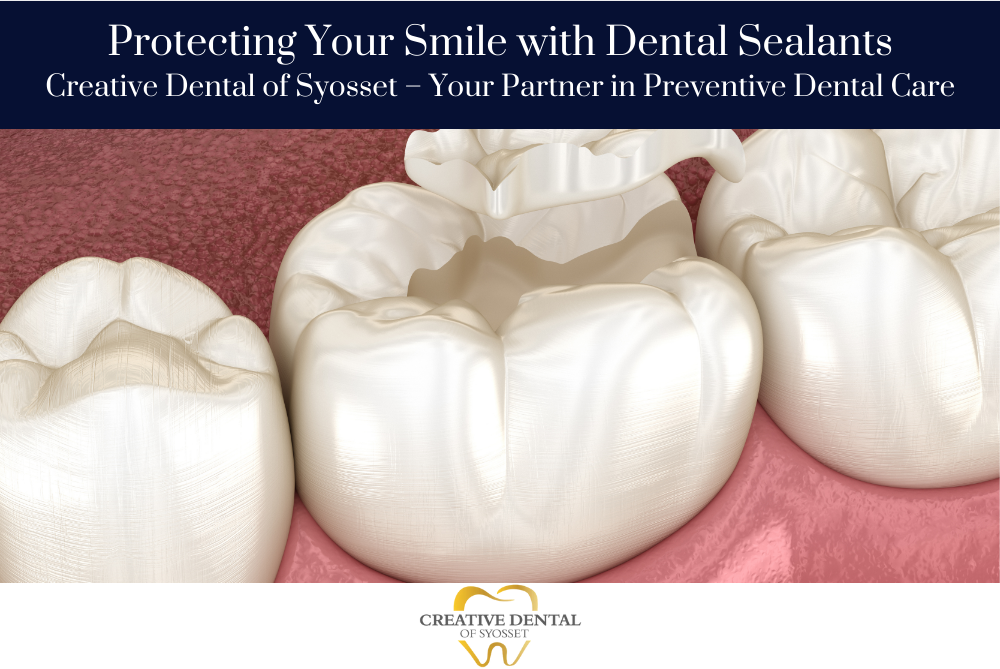
Dental sealants are thin plastic coatings painted onto the deep grooves and pits of back teeth, where most cavities in children and teens form. The molars and premolars have natural fissures on their chewing surfaces that are too narrow for toothbrush bristles to reach effectively. Food and bacteria collect in those grooves and produce acid, which decays the tooth even when a child brushes diligently. A sealant fills the groove with a smooth resin that resists decay and is easy to clean.
The Centers for Disease Control estimates that 9 out of 10 cavities form on back-tooth chewing surfaces. Sealing those surfaces is the single most effective preventive intervention dentistry has, after fluoride.
Are Dental Sealants Safe? The BPA Question
This is the question parents most often ask Dr. Mozner. The short answer is yes, sealants are safe. The longer answer addresses BPA (bisphenol A) directly:
Modern resin-based dental sealants can release a trace amount of BPA briefly after placement. The American Dental Association estimates that exposure at roughly 0.09 nanograms per sealant per day. For comparison, the U.S. Environmental Protection Agency’s reference exposure threshold for BPA is approximately 1,000,000 nanograms per day for a 6-year-old child. The exposure from a single sealant is approximately 11 million times below the EPA reference threshold. Handling a thermal-paper grocery receipt typically delivers more BPA than a sealant.
The 2016 evidence-based clinical practice guideline issued jointly by the American Dental Association and the American Academy of Pediatric Dentistry (Wright JT et al., published in the Journal of the American Dental Association, PMID 27470525) reviewed BPA exposure from sealants comprehensively and concluded there is no health concern from the BPA in dental materials. The U.S. Food and Drug Administration has reached the same conclusion.
BPA-free sealant formulations also exist for parents who prefer to eliminate even trace exposure. We carry both options at Creative Dental of Syosset and discuss the choice with parents at the placement appointment.
What the Major Health Organizations Say About Sealants
- Centers for Disease Control (CDC): “School-age children without sealants have almost three times more cavities than children with sealants.” Sealants prevent up to 80 percent of cavities in molars over the first 2 years.
- American Dental Association (ADA): Sealants are listed as a recognized cavity-prevention treatment. The Council on Scientific Affairs publishes the joint Wright 2016 guideline.
- American Academy of Pediatric Dentistry (AAPD): Recommends pit-and-fissure sealants on the occlusal surfaces of primary and permanent molars in children and adolescents at risk for caries.
- U.S. Food and Drug Administration (FDA): Reviews the materials used in dental sealants and has not identified safety concerns at the doses used.
- Cochrane Database of Systematic Reviews (Ahovuo-Saloranta et al., 2017): Resin-based sealants reduced caries risk by approximately 76 percent at 24 months in randomized trials.
Sealants have been a recommended preventive treatment in pediatric dentistry for over 50 years. The clinical evidence base is large and well-replicated.
Who Should Get Dental Sealants?
Sealants are most commonly recommended for children, but the indications extend to several adult groups as well. Strong candidates include:
- Children, first molars (around age 6). The first permanent molars erupt at approximately age 6 and are the most cavity-prone teeth in the mouth during childhood. AAPD recommends sealing them as soon as the chewing surface fully clears the gum.
- Children, second molars (around age 12). Second permanent molars erupt at approximately age 12. Sealing them at eruption captures the highest-risk window.
- Children with retained primary molars. The AAPD also supports sealing primary molars in children at high caries risk before the permanent set arrives.
- Cavity-prone adults with deep molar grooves. If you have a history of multiple fillings, your back teeth are the likely site of recurrence and sealants offer additional protection.
- Adults with dry mouth (xerostomia) from prescription medications. Reduced saliva flow accelerates decay; sealants offset some of that risk.
- Adults with bruxism (teeth grinding). Note that bruxism is also the #1 reason adult sealants fail early; pair sealant placement with a custom nightguard.
- Adults with GERD (acid reflux). Acid exposure weakens enamel; sealants protect the most vulnerable surfaces.
- Patients with dexterity limitations. Anyone who struggles with thorough brushing of back teeth (dexterity loss with age, post-stroke, special needs) benefits from this extra protection.
Why Adults Should Consider Dental Sealants
Sealants are widely associated with childhood, and most adult dental insurance reflects that bias by capping coverage at age 14 to 18. Clinically, however, the case for adult sealants is strong if you fall into any of the candidate groups above. The math:
- Industry-norm sealant cost is $30 to $60 per tooth.
- If a sealant prevents one cavity over its 5 to 10 year lifespan, the alternative is a $150 to $350 composite filling.
- If that filling fails 10 to 15 years later (typical), the second restoration is often a crown at $1,600 to $2,000.
- If the crown is on an already-root-canaled tooth, the next step is extraction and implant at approximately $1,800 to $5,000.
This is what dentistry calls the restorative cycle, and it begins with a single cavity that a $40 sealant could often have prevented. For cavity-prone adults, sealants are typically the most cost-effective intervention available.
Resin vs Glass-Ionomer Sealants: Which Lasts Longer?
Two materials are commonly used for pit-and-fissure sealants. They are not interchangeable, and the choice depends on the clinical situation:
Most patients at Creative Dental of Syosset receive resin-based sealants. Glass-ionomer is reserved for cases where the tooth cannot be reliably isolated from saliva during placement (often partially erupted molars in young children).
The Sealant Procedure: 6 Steps, Painless, ~10 Minutes per Tooth
Sealant placement is one of the most patient-friendly procedures in dentistry. There is no drilling, no anesthesia, and no discomfort. Here is what happens for each tooth being sealed:
- Cleaning. The chewing surface is cleaned with a prophy brush and pumice paste to remove plaque and food debris from the grooves.
- Drying and isolation. The tooth is rinsed and dried with compressed air. A cotton roll or rubber dam keeps saliva away from the surface during the next steps. Moisture contamination is the #1 cause of early sealant failure.
- Etching. A mild phosphoric acid gel (typically 35 to 37 percent) is applied for about 15 seconds. The acid roughens the enamel surface microscopically so the sealant bonds tightly.
- Rinsing and re-drying. The acid is rinsed thoroughly, and the tooth is dried again. Surface should look chalky and dull, not glossy.
- Painting on the sealant. The liquid sealant is painted into the grooves with a small applicator brush. The dentist or hygienist watches for full flow into every fissure and avoids over-filling so the bite stays correct.
- Curing. A blue curing light (470 nanometer wavelength) is held over the sealant for 20 to 40 seconds. The sealant hardens fully in those seconds.
You can eat and drink immediately after the appointment. The sealed tooth feels different for the first day or two as your bite adjusts to the new surface, then becomes unnoticeable.
How Long Do Dental Sealants Last?
Resin-based dental sealants typically last 5 to 10 years. Glass-ionomer sealants last 3 to 5 years. The 2017 Cochrane systematic review (Ahovuo-Saloranta) found that 76 percent of resin sealants were fully retained at 36 to 48 months, compared with 8 percent for low-viscosity glass-ionomer. Lifespan in any individual case depends on:
- Bite force and chewing patterns. Heavy chewers wear sealants faster.
- Bruxism (teeth grinding). The single biggest accelerant of sealant failure in adults.
- Diet. Frequent sticky or hard foods (taffy, ice, hard candy) chip sealants over time.
- Oral hygiene quality. Plaque-acid undermining the sealant edge over months and years contributes to failure.
- Routine dental visits. A sealant that develops a chip or partial loss can be repaired easily at a routine cleaning. A sealant that fails undetected and traps bacteria underneath is the worst-case outcome and the reason routine 6-month cleanings matter.
Sealants are checked at every routine prophylactic cleaning at Creative Dental of Syosset. If a partial loss is detected, the sealant can be touched up or replaced in the same visit.
Dental Sealant Cost in Syosset and on Long Island
Industry-norm sealant pricing across the United States and the Long Island metro area is $30 to $60 per sealed tooth. The cost factors that move pricing within that range include the brand and material of the sealant (resin vs glass-ionomer; standard vs BPA-free), the geographic market, whether sealants are placed by the dentist or hygienist, and whether multiple teeth are sealed at the same visit (per-tooth costs typically come down with volume).
For context, the cost of treating a single cavity with a composite filling in the same area runs $150 to $350. Sealing four molars at $40 each ($160 total) costs roughly the same as one filling and prevents cavities on all four teeth for the next 5 to 10 years.
Does Insurance Cover Dental Sealants?
Pediatric coverage is broad. Adult coverage is the gap. Specifics:
- Children under age 14: Most dental insurance plans, including Medicaid, cover sealants on permanent molars at 80 to 100 percent. This is standard pediatric preventive care.
- Children age 14 to 18: Coverage typically continues but at lower percentages. Plans differ; verify with your specific plan.
- Adults: Most adult dental plans do NOT cover sealants. The reasoning is that adult sealants are classified as a cavity-prevention service that overlaps with regular cleanings, and most carriers consider the overlap reason to deny coverage. Expect to pay out of pocket at the $30 to $60 per tooth industry norm.
- HSA and FSA eligibility: Adult sealants are typically eligible expenses under both Health Savings Accounts and Flexible Spending Accounts, which effectively reduces the out-of-pocket cost by your marginal tax rate (typically 20 to 35 percent).
Creative Dental of Syosset accepts PPO insurance only and does not participate with HMO plans. We verify your specific sealant benefit at the consultation visit before any sealant work.
Visit Creative Dental of Syosset for Pediatric or Adult Sealants
Creative Dental of Syosset, led by Dr. Timur Mozner, DDS, serves preventive-care patients across Long Island including Syosset, Oyster Bay, Plainview, Jericho, Cold Spring Harbor, Woodbury, Hicksville, Bethpage, Glen Head, Old Westbury, Roslyn, Glen Cove, and Massapequa. Our office is located at 34 S Oyster Bay Rd, Syosset, NY 11791, in Nassau County, with on-site parking and weekday plus Saturday morning appointments.
Address: 34 S Oyster Bay Rd, Syosset, NY 11791 Phone: (516) 921-3290 Hours: Monday to Friday 9:00 AM to 6:00 PM, Saturday 9:00 AM to 1:00 PM Patient communication: English, Polish, Russian, Ukrainian
To book a sealant placement appointment for your child or yourself, call (516) 921-3290 or use our online appointment request. Sealants are typically placed at a routine cleaning visit, so we can schedule the prophy and sealant in the same appointment.
Frequently Asked Questions about Dental Sealants
Are dental sealants safe?
Yes. The American Dental Association, American Academy of Pediatric Dentistry, Centers for Disease Control, and U.S. Food and Drug Administration all recognize dental sealants as safe. The trace BPA exposure from a single sealant is approximately 0.09 nanograms, more than 11 million times below the EPA reference threshold of ~1,000,000 nanograms per day for a 6-year-old. The 2016 ADA + AAPD joint clinical guideline (Wright et al., JADA, PMID 27470525) found no health concern from the BPA in dental materials.
How long do dental sealants last?
Resin-based sealants typically last 5 to 10 years. Glass-ionomer sealants last 3 to 5 years. The 2017 Cochrane systematic review (Ahovuo-Saloranta) found 76 percent of resin sealants fully retained at 36 to 48 months versus 8 percent for low-viscosity glass-ionomer. Lifespan depends on bite force, bruxism, diet, and how often the sealant is checked at routine cleanings.
Do adults need dental sealants?
Adults benefit from sealants when they have deep molar grooves, a history of cavities, dry mouth from prescription medications, bruxism, GERD, or struggle to clean back teeth thoroughly. The CDC notes that 9 in 10 cavities form on back-tooth chewing surfaces, and sealants prevent up to 80 percent of those cavities. Industry-norm cost is $30 to $60 per sealed tooth, and most adult dental plans cap sealant coverage by age 14 to 18, meaning adults usually pay out of pocket.
How much do dental sealants cost?
Industry-norm pricing for dental sealants is $30 to $60 per sealed tooth. By comparison, treating a single cavity with a composite filling runs $150 to $350. Sealing four molars at $40 each ($160 total) costs roughly the same as one filling and prevents cavities on all four teeth for the next 5 to 10 years. Most pediatric dental plans cover sealants at 80 to 100 percent for children under age 14; adults typically pay out of pocket.
How effective are dental sealants?
According to CDC Vital Signs October 2016, sealants prevent up to 80 percent of cavities in molars during the first 2 years and roughly 50 percent for the next 4 years. The Cochrane Ahovuo-Saloranta 2017 systematic review found a 76 percent reduction in caries risk at 24 months. Children without sealants have nearly three times more cavities than children with sealants, per the CDC.
At what age should children get sealants?
The American Academy of Pediatric Dentistry recommends sealing the first permanent molars as soon as they erupt, which is approximately age 6, and the second permanent molars when they erupt around age 12. AAPD also supports sealing primary molars in children at high caries risk before permanent teeth arrive. The earlier sealants are placed, the more decay they prevent during the highest-risk childhood window.
Do sealants replace brushing and flossing?
No. Sealants are a supplement to good oral hygiene, not a replacement. Sealants protect the chewing surfaces of back teeth but do not protect the smooth sides of teeth, the gum line, or in-between teeth (which is where flossing matters most). Twice-daily brushing, daily flossing, and routine 6-month dental visits remain essential.
Will dental sealants hurt?
No. Sealant placement involves no drilling, no anesthesia, and no discomfort. The full procedure takes 5 to 10 minutes per tooth and uses only cleaning, etching, painting, and curing steps. Most patients describe the experience as easier than a routine cleaning. This is why sealants are an excellent first dental procedure for nervous children.
What happens if a sealant falls off?
Partial sealant loss is common over the years and is easy to repair. The exposed groove can be re-sealed during a routine cleaning visit, typically without any anesthesia. The most important thing is to detect partial loss early at routine 6-month cleanings before bacteria can become trapped underneath, which is why we check sealant integrity at every cleaning visit at Creative Dental of Syosset.
Are BPA-free sealants available?
Yes. BPA-free sealant formulations are commercially available and we carry both standard resin and BPA-free options at Creative Dental of Syosset. Parents who prefer to eliminate even the trace BPA exposure of standard sealants (which is more than 11 million times below the EPA reference threshold per the ADA) can request the BPA-free option at the placement appointment. Both options are FDA-cleared and clinically equivalent in caries prevention.
Related: our topical fluoride varnish guide for the second pillar of preventive care, our prophylactic cleaning guide (sealants are typically placed at the same visit), our dental sealants service page, and our pediatric dentistry page for first-visit guidance for children.